
AI Conversation Intelligence for Small Business Sales Teams
Author: Moeez Ullah Published Date: August 27, 2026

Why Small Sales Teams Can't Afford to Skip Call Analysis Anymore
A five-person sales team doesn't have the luxury of a dedicated revenue-operations analyst listening to every call. Yet a McKinsey study on AI-assisted quality review found that without automation, teams can realistically review only about 3% of sales calls manually — a number that jumps to roughly 95% once AI handles the listening. For a startup or small business, that gap isn't a minor inefficiency; it's the difference between knowing exactly why deals are lost and guessing.
For years, the tools that solved this problem Gong, Chorus, Clari Copilot were built and priced for enterprise revenue teams with dedicated sales-enablement budgets. A 10-person startup sales team rarely needs (or can justify) that scope. What it needs is something narrower: a way to capture every call, message, and follow-up automatically, understand what happened in each conversation, and know which leads deserve attention today — without a six-figure contract or a three-month rollout.
That's the gap AI conversation intelligence for small business teams is starting to fill, and it's worth understanding how it actually works before you evaluate a tool.
What AI Conversation Intelligence Actually Does

At its core, conversation intelligence software listens to (or reads transcripts of) sales calls, WhatsApp messages, and emails, then applies natural language processing to extract structured insight from unstructured conversation. For a small business, the practical output usually breaks down into four categories:
Capture: every call, message, and interaction is logged automatically, so nothing depends on a rep remembering to update the CRM.
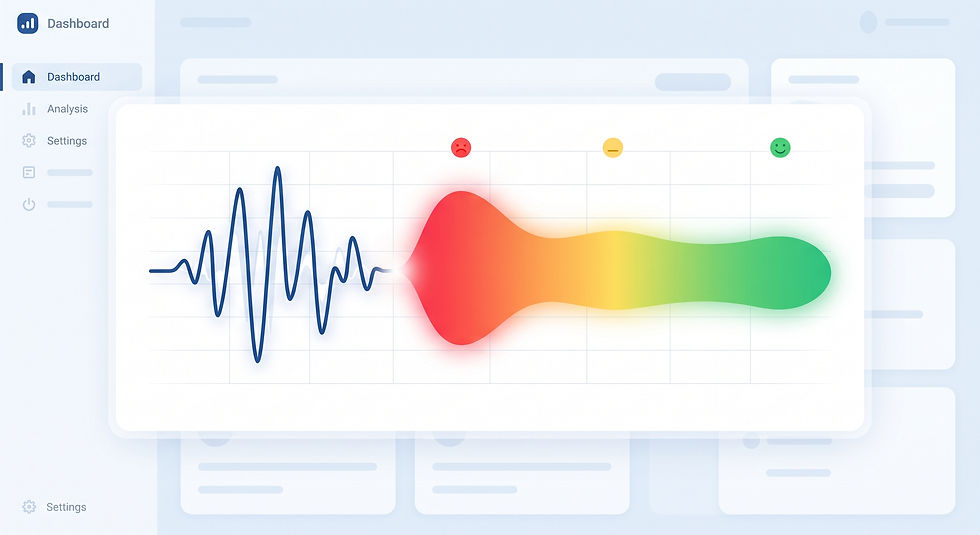
Analysis: sentiment, objections, and buying signals are flagged inside each conversation.
Recommendation: the system tells you who to follow up with and when, based on engagement patterns rather than gut feeling.
Coaching: patterns across calls (what your best closers do differently) become visible instead of anecdotal.
The distinction between this and a basic call-recording tool is the "analysis" and "recommendation" layers. Recording software tells you what was said. Conversation intelligence tells you what it means for the deal.
Small Business vs. Enterprise: What Actually Changes
Enterprise conversation intelligence platforms are built around revenue operations teams, complex deal stages, and dozens of integrations. Small business needs are simpler but no less real the difference is in scope and setup effort, not in the underlying value.

Factor | Enterprise Conversation Intelligence | Small Business / Startup Conversation Intelligence |
Typical buyer | RevOps team, VP of Sales at 100+ rep orgs | Founder, sales manager, 3–30 rep teams |
Setup time | Weeks to months, admin-heavy | Same-day to a few days |
Pricing model | Custom quotes, per-seat enterprise contracts | Transparent tiers, often self-serve |
Core need | Deal-stage forecasting, methodology scoring (MEDDIC, etc.) | Never missing a lead, knowing why deals stall |
Channel coverage | Primarily calls and video meetings | Calls, SMS, WhatsApp — wherever the customer actually reaches out |
Language support | Often US-English-first | Multilingual support matters more for lean, globally distributed teams |
Small teams generally don't need custom deal-scoring methodologies. What they need is simpler and arguably more urgent: capture every interaction automatically, and get a clear, ranked answer to "who should I call back right now, and why."
The Three Signals Small Teams Should Actually Track
Not every metric a conversation intelligence platform can generate is worth a small team's attention. Three matter disproportionately more than the rest:
1. Response Timing
How quickly a lead is contacted after their first interaction has a direct, measurable relationship with conversion rates. AI-based capture removes the lag caused by manual logging, so follow-up timing is based on the actual moment of contact, not when a rep gets around to entering it.
2. Objection Patterns
When conversation intelligence flags the same objection — price, timing, "need to check with my team" — across multiple calls, that's a signal worth acting on immediately, not something to notice six months later in a quarterly review. Small teams that catch a recurring objection early can adjust messaging in days instead of quarters.
3. Buying Signals
Phrases indicating urgency, budget confirmation, or a next-step request are easy to miss in a busy day of calls but are exactly what separates a "warm" lead from a genuinely ready one. Surfacing these automatically lets a small team prioritize without needing a dedicated analyst to review every transcript.
What to Look for When Evaluating a Tool
For a small business or startup sales team, the evaluation checklist looks different from an enterprise RFP. Prioritize:
Unified capture across channels — calls, SMS, and messaging apps like WhatsApp, not just phone calls.
Fast time-to-value — insight from day one, not after a lengthy onboarding.
Multilingual analysis — increasingly essential for lean teams selling across borders without hiring native-language reps in every region.
Actionable recommendations, not just dashboards — a small team doesn't have time to interpret a 40-metric report; it needs a clear "call this person next" signal.
Transparent, predictable pricing — enterprise-style custom quotes rarely fit an early-stage budget.
Where This Fits Into a Growing Sales Process
Conversation intelligence isn't a replacement for a CRM or a sales process — it's the layer that makes both more accurate. A small business that adopts it early tends to see the benefit compound: cleaner CRM data (because logging is automatic), faster follow-up (because response-time insight is immediate), and a coaching loop that improves close rates without needing a full-time sales enablement hire.
The businesses most likely to benefit are ones already feeling the strain of manual tracking missed follow-ups, no visibility into why deals stall, or reps who close at very different rates for reasons nobody can quite explain. Those are symptoms of a capture-and-analysis gap, and it's a gap AI conversation intelligence was built to close.
Frequently Asked Questions
Does a 5-person sales team really need conversation intelligence?
If leads are being missed, follow-up is inconsistent, or nobody can say why some reps close more than others, the answer is usually yes, the ROI shows up quickly through recovered leads and faster follow-up alone.
Is this only for phone calls?
No. Modern platforms increasingly cover SMS and messaging apps like WhatsApp, which matters for teams that don't rely on calls as their primary channel.
How is this different from a call recorder?
A recorder captures audio. Conversation intelligence analyzes it sentiment, objections, buying signals and turns that into a recommended next action.


Comments